Colon and L5 on feline radiographs: constipation or megacolon?
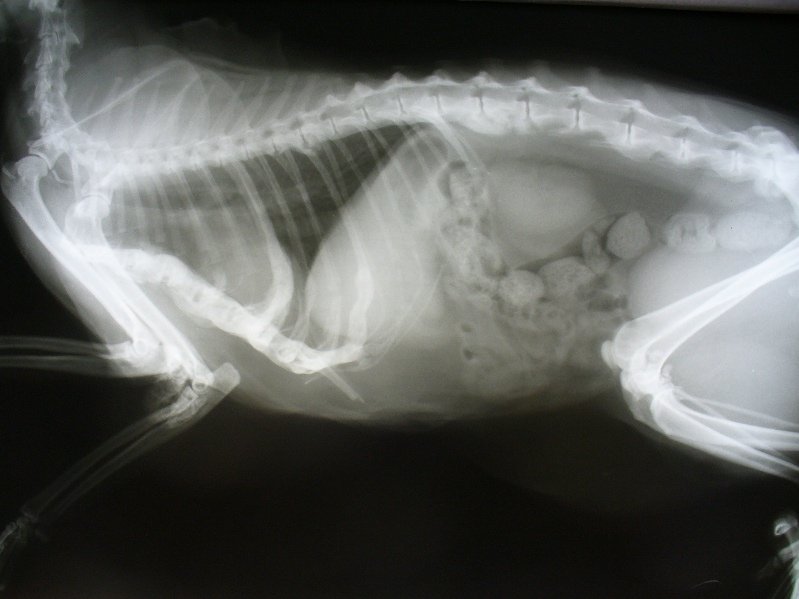
6-year-old neutered male Domestic Shorthair with two episodes of constipation in recent months; it strains to defecate and the faeces are hard. The colon contains compacted faecal balls and its maximum diameter is about 1.1 times the length of the L5 vertebral body. Lateral radiograph of the thorax and abdomen:
 zoom_inEnlarge
What is the most appropriate interpretation?
chevron_right Show answer and explanation
A. Faecal retention without criteria for megacolon: treat the constipation, look for its cause and monitor progress
Correct. A colon/L5 ratio below about 1.28 is considered normal and one above about 1.48 suggests megacolon. Here there are retained faeces in a colon of normal calibre: diet, hydration and laxatives, and look for causes such as pain, dehydration or pelvic stenosis.
B. Megacolon: a faeces-filled colon is enough for the diagnosis, with no need to measure it
Abundant faeces only indicate retention. Megacolon is a persistent dilation of the colon with loss of function, supported by the L5 ratio and by the clinical course.
C. Small-intestinal obstruction: the faecal balls are dilated loops with contents
Mottled, rounded content with gas lying along the course of the colon is typical of faeces. Obstructed small-intestinal loops are usually dilated with gas or fluid.
D. Idiopathic megacolon: subtotal colectomy is indicated without delay
Without colonic dilation or failure of medical treatment there is no surgical indication. Subtotal colectomy is reserved for megacolon that does not respond to medical management.
lightbulb Key takeaway
On the lateral view, measure the maximum diameter of the colon and compare it with the length of the L5 body: below 1.28 is normal and above 1.48 suggests megacolon. Repeated untreated constipation can end in megacolon: look for the cause (pelvic fractures with canal stenosis, pain, dehydration, chronic kidney disease).
Test yourself with 10 random questions
Diagnostic imaging · 200 questions, a different test every time
Related questions
Updated: October 31, 2026 · Educational content for veterinary professionals. It does not replace current clinical guidelines or the judgement of the attending veterinarian.