Cystic liver mass in the cat: biliary cystadenoma
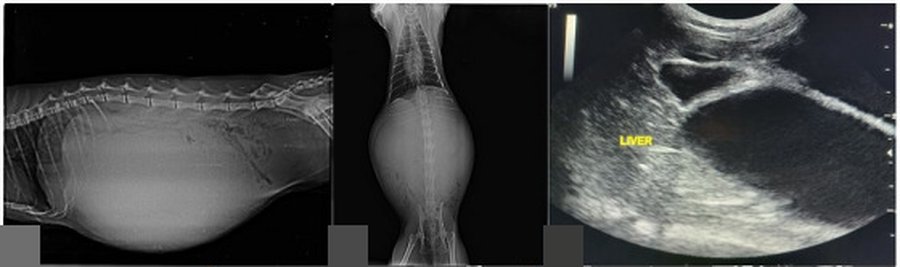
7-year-old neutered male domestic shorthair cat with several weeks of vomiting, reduced appetite and abdominal distension. Biochemistry shows a cholestatic pattern (raised ALP and GGT). Lateral and ventrodorsal radiographs and ultrasound of the lesion:
 zoom_inEnlarge
The lesion is a multiloculated cyst with thin septa and no mural nodules or solid component. What is the most likely diagnosis and how is it confirmed?
chevron_right Show answer and explanation
A. Biliary cystadenoma; confirmed by histopathology
Correct. In adult and older cats, a multiloculated cystic liver lesion is most often a biliary cystadenoma (adenoma), the most common benign liver tumour in the cat. Imaging is suggestive but cannot reliably separate it from a cystadenocarcinoma: confirmation is histological, and complete resection is usually curative.
B. Hepatorenal polycystic disease; PKD1 genetic test
Polycystic disease in Persian cats can involve the liver, but it causes multiple, usually small cysts and almost always renal cysts. A single giant septated cystic mass is not typical.
C. Liver abscess; percutaneous drainage and antibiotics
Abscesses have echogenic content and a thick, irregular wall, and usually come with fever and neutrophilia. An anechoic lesion with thin septa in a cat without systemic signs does not fit.
D. Hepatic lymphoma; ultrasound-guided aspirate cytology
Hepatic lymphoma causes diffuse hepatomegaly or solid hypoechoic nodules, not anechoic cystic lesions with septa.
lightbulb Key takeaway
In the cat, a multiloculated cystic liver lesion is usually a biliary cystadenoma, benign and resectable. Look for mural nodules or a solid component, which would raise suspicion of malignancy, and confirm with histology.
Test yourself with 10 random questions
Diagnostic imaging · 200 questions, a different test every time
Related questions
Updated: November 1, 2026 · Educational content for veterinary professionals. It does not replace current clinical guidelines or the judgement of the attending veterinarian.