Urethroliths in male dogs: radiography and urethrography
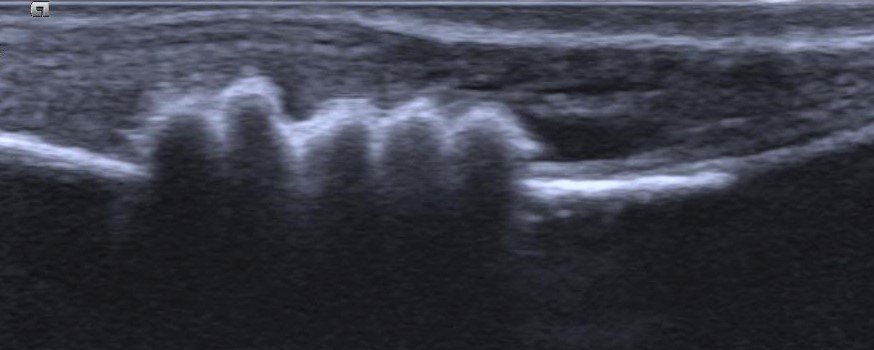
7-year-old male Miniature Schnauzer with stranguria and drops of bloody urine. The urinary catheter stops at the level of the os penis. On the lateral abdominal radiograph, with the hind limbs in a neutral position, the bladder is distended and no stones are seen. Ultrasound of the urethra at the level of the os penis:
 zoom_inEnlarge
What is most appropriate now?
chevron_right Show answer and explanation
A. Conclude they are radiolucent uroliths (urate or cystine) and not repeat the radiograph
In the standard view the femurs overlap the perineal and penile urethra, and many radiopaque stones are missed. They cannot be called radiolucent without an adequate view.
B. Rely on ultrasound alone, because it reliably examines the whole urethra
Ultrasound shows the bladder, the prostatic urethra and part of the penile urethra well, but the pelvic urethra is hidden by the pelvis. It cannot count all the stones or plan their removal.
C. Interpret it as reverberation from the os penis, with a normal urethra
Several aligned hyperechoic foci in the urethral lumen, each with a clean acoustic shadow, are calculi. Reverberation produces repeated, equally spaced lines with a dirty shadow.
D. Repeat the lateral view with the hind limbs drawn cranially and, if needed, retrograde urethrography
Correct. Urethroliths in male dogs typically lodge just caudal to the os penis and at the ischial arch. With the limbs drawn cranially they are seen without superimposition, and urethrography shows filling defects even with radiolucent stones.
lightbulb Key takeaway
When looking for uroliths, the radiograph must include the whole urinary tract: kidneys, bladder and the entire urethra to the tip of the penis. In urethrography, avoid introducing air bubbles, because they mimic radiolucent stones. Retropulse urethroliths into the bladder before deciding on treatment.
Test yourself with 10 random questions
Diagnostic imaging · 200 questions, a different test every time
Related questions
Updated: October 31, 2026 · Educational content for veterinary professionals. It does not replace current clinical guidelines or the judgement of the attending veterinarian.