Whether you are a veterinary student, preparing for board or civil-service exams, or just want to keep your clinical reasoning sharp between consultations, there has never been a better time to study online. We have gathered the best websites to learn veterinary medicine that we know and use: 3D anatomy atlases, question banks with explanations, a parasitology game, free consensus guidelines and online courses. All of them can be used without paying (some have an optional premium tier) and most work from a phone.
How we chose these websites
This is not a list of everything that exists, but of what genuinely helps you study. We applied three criteria: the content must be reliable (universities, scientific societies or reference veterinary publishers), it must be interactive (questions, models, games) or at least very practical, and you must be able to start for free. At the end of the article we suggest how to combine them into a study plan.
1. Vetflow: 3D anatomy with more than 3,000 questions
One of our favourites. Vetflow offers 3D animal models (dog, cat, horse, cattle and other species) built from real CT data, which you can rotate, isolate and label to identify bones, muscles and organs. The study side is a bank of more than 3,000 anatomy questions synced with the models: classic multiple choice with instant feedback, "find the structure" in the 3D model and "name the highlighted structure". There is a mobile app, spaced repetition and custom playlists. You can start for free; some content needs a premium subscription.

2. WikiVet: the veterinary encyclopaedia with quizzes
WikiVet is the collaborative veterinary encyclopaedia created by UK veterinary schools, with expert-reviewed content under a Creative Commons licence. For studying, its WikiQuiz section is particularly valuable: multiple-choice questions with feedback and a link to the relevant article, organised by subject (anatomy and physiology, clinical, pharmacology, infectious diseases, pathology), by species (dog, cat, horse, cattle, rabbit, reptiles, poultry) and by body system. No registration is needed.

3. Veterinaria Madrid: 1,600 clinical cases at veterinariamadrid.com
Our own vet quizzes section at veterinariamadrid.com: 1,600 interactive clinical cases in dogs and cats across 15 sections (clinical pathology, diagnostic imaging, cardiology, dermatology, emergency medicine, neurology, parasitology and more), with all four options explained, a key point per question and random 10- or 20-question tests that prioritise what you have not seen or got wrong. The diagnostic imaging section includes real radiographs, ultrasound, CT and MRI images, and for a specialist-level challenge there is VET PRO, with 100 very difficult questions. It is free, in Spanish and English, with no sign-up: progress is stored in your browser. If you want a taster, try the 5 emergency cases challenge.

4. MSD Veterinary Manual: clinical quizzes
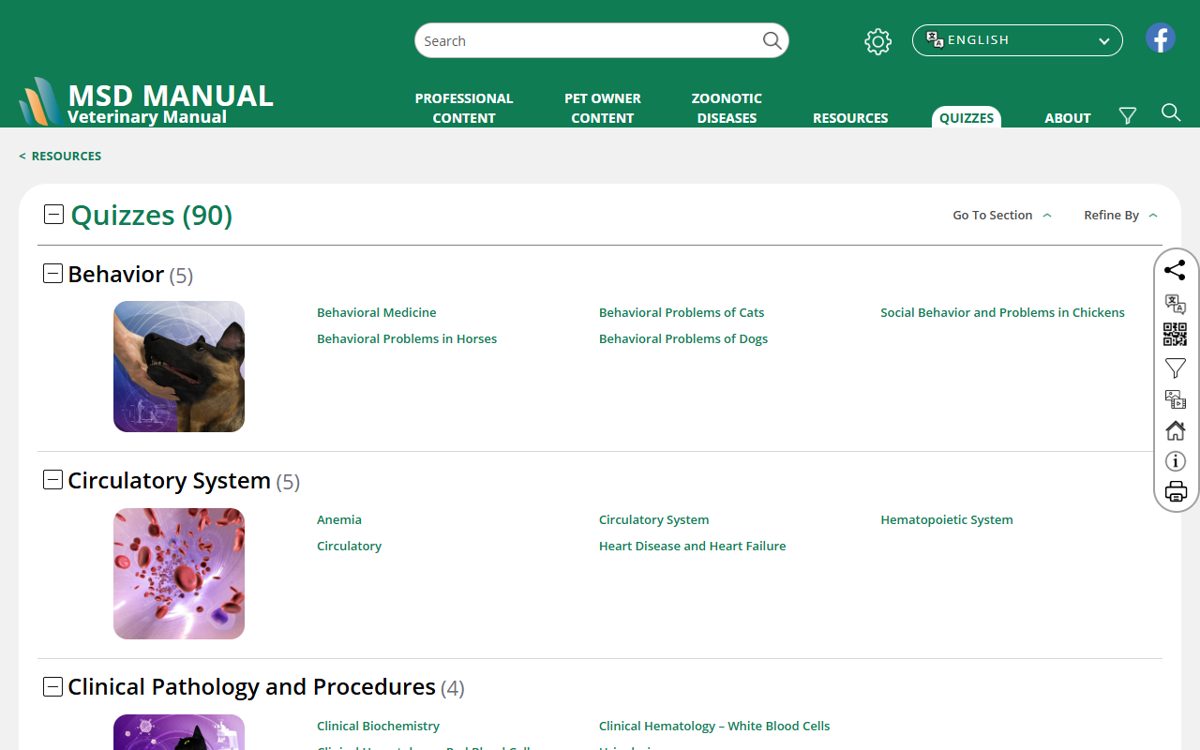
The free reference veterinary manual, in its international edition. Besides the chapters, the MSD Veterinary Manual has a quizzes section, around 90 of them, on diseases of dogs and cats, the digestive, respiratory and nervous systems, parasitology, pharmacology, dermatology and haematology. Each quiz links back to the manual chapter, so it is a great way to spot gaps and fill them straight away. Everything is free and needs no account.
5. Veterinary Anatomy Studio (ICAR-IVRI): timed exams
Developed in the Anatomy section of the Indian Veterinary Research Institute, Veterinary Anatomy Studio is a free, ad-free platform with a regional anatomy atlas (forelimb, head and neck, thorax, abdomen, hindlimb and pelvis), histology and embryology, and a bank of more than 2,400 questions organised by syllabus units. The most useful feature for exam preparation is its timed exam mode, configurable by duration (15 to 90 minutes), number of questions and format: multiple choice, true/false and fill in the blanks. It runs as an installable web app that works offline and keeps your progress in your own browser.

6. Which parasite am I? (VISAVET-UCM): parasitology as a game
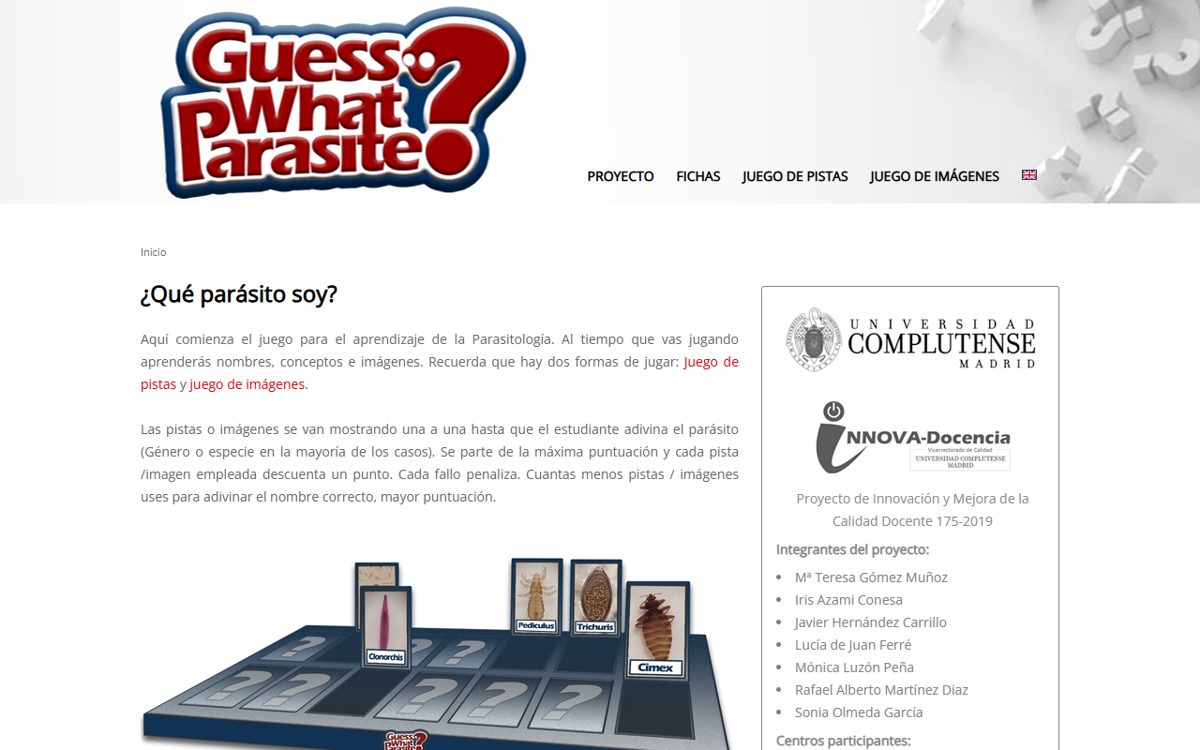
A teaching-innovation project from the Complutense University of Madrid, with its veterinary and medical faculties and the VISAVET centre. In Which parasite am I? you have to guess the parasite in two modes: by clues, revealed one at a time while your score drops, and by images, with four photographs of each parasite. When you get it right, all the clues are shown and a fact sheet with taxonomy, morphology, life cycle and diagnosis opens, so you learn the scientific names almost without noticing. It is in Spanish with an English version, and free. If you then want clinical cases, our parasitology section has 100 questions with a Spanish focus (leishmaniosis, heartworm, ticks).
7. eClinPath (Cornell University): clinical pathology
For clinical pathology there is nothing quite like it. eClinPath is the online textbook of the Cornell College of Veterinary Medicine: haematology, haemostasis, chemistry, urinalysis and cytology, with an image atlas, calculators, a section on artefacts and reference intervals, and diagnostic challenges to practise on. It is free (donations welcome) and in English. Pair it with our clinical pathology quizzes to go from theory to interpreting a real panel.

Free reference clinical guidelines
Studying is not only about quizzes. Consensus guidelines underpin what exams ask and what clinics do, and several are available at no cost:
- IRIS (International Renal Interest Society): staging of chronic kidney disease, treatment recommendations by stage and grading of acute kidney injury in dogs and cats, plus continuing-education articles.
- WSAVA: global guidelines on vaccination, nutrition, pain, dental, liver and gastrointestinal disease, animal welfare and hereditary disease.
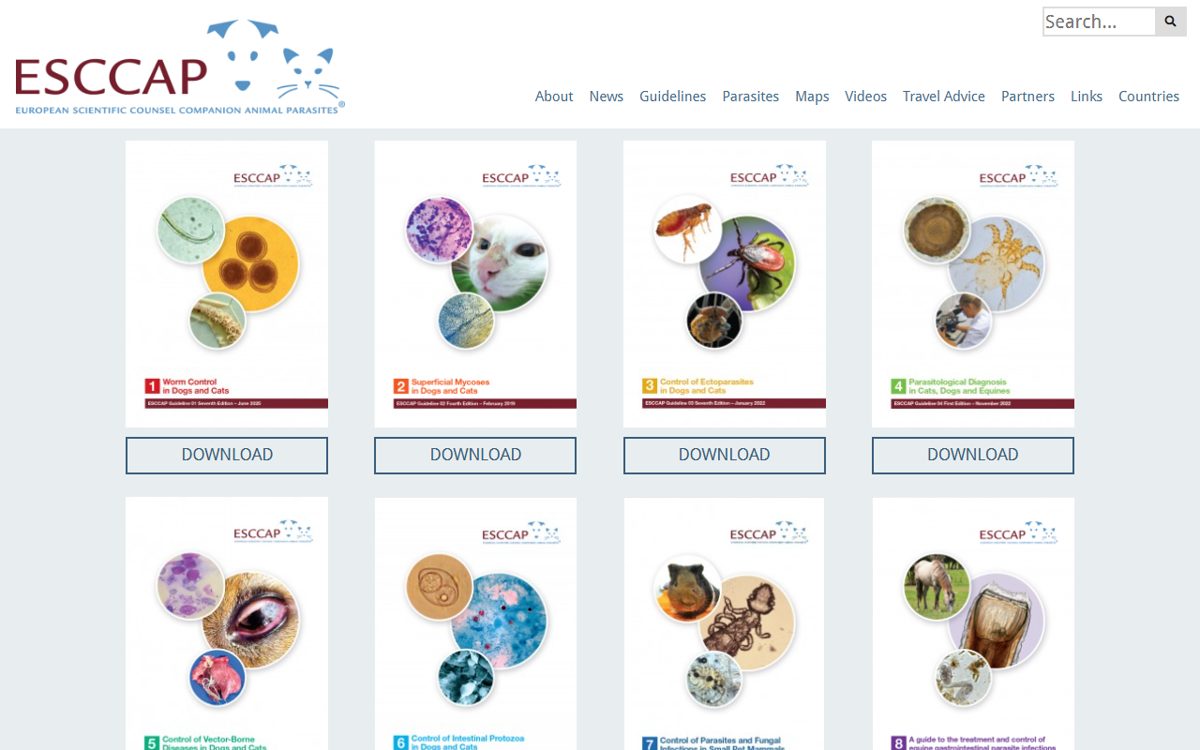
- ESCCAP: European guidelines on worm control, ectoparasites, intestinal protozoa, vector-borne diseases and parasitological diagnosis, with fact sheets and life cycles. It has a national association in Spain.


Scientific evidence and continuing education
RCVS Knowledge and Veterinary Evidence
The charity of the UK veterinary college maintains evidence-based veterinary medicine resources: the introductory EBVM Learning course, a toolkit for finding and appraising studies, and the open-access journal Veterinary Evidence, with knowledge summaries that answer specific clinical questions. Very useful for final-year projects and for learning to read a paper critically.
Online courses and training in Spain
On Coursera, the University of Edinburgh offers The Truth About Cats and Dogs, a course of about five weeks on behaviour, communication and welfare of dogs and cats that can be followed free of charge in audit mode (the certificate is paid). It is introductory, but very well made and ideal for veterinary nurses and early-year students. For continuing education in Spain, AVEPA runs congresses, specialty working groups and online training; some resources are for members only.


How to combine them: a simple study plan
- Foundations: anatomy with Vetflow or Veterinary Anatomy Studio (15 minutes of questions a day beat a whole afternoon once a month) and clinical pathology with eClinPath.
- Revision by subject: WikiQuiz and the MSD quizzes to find gaps, then read the matching chapter.
- Clinical reasoning: full cases in our quizzes, ten at a time, reviewing the explanation of every option you got wrong.
- Parasitology: a round of Which parasite am I? and a batch of questions, with the ESCCAP guidelines to hand.
- Judgement: when an answer surprises you, check the guideline (IRIS, WSAVA, ESCCAP) or an evidence summary before taking it as read.
Do you know a website that should be on this list? Let us know and we will add it in the next update.
This article is for information only. The resources listed are educational and do not replace current clinical guidelines or the judgement of the veterinarian responsible for each patient.