Pregnancy in the bitch: when the fetal skeleton becomes visible
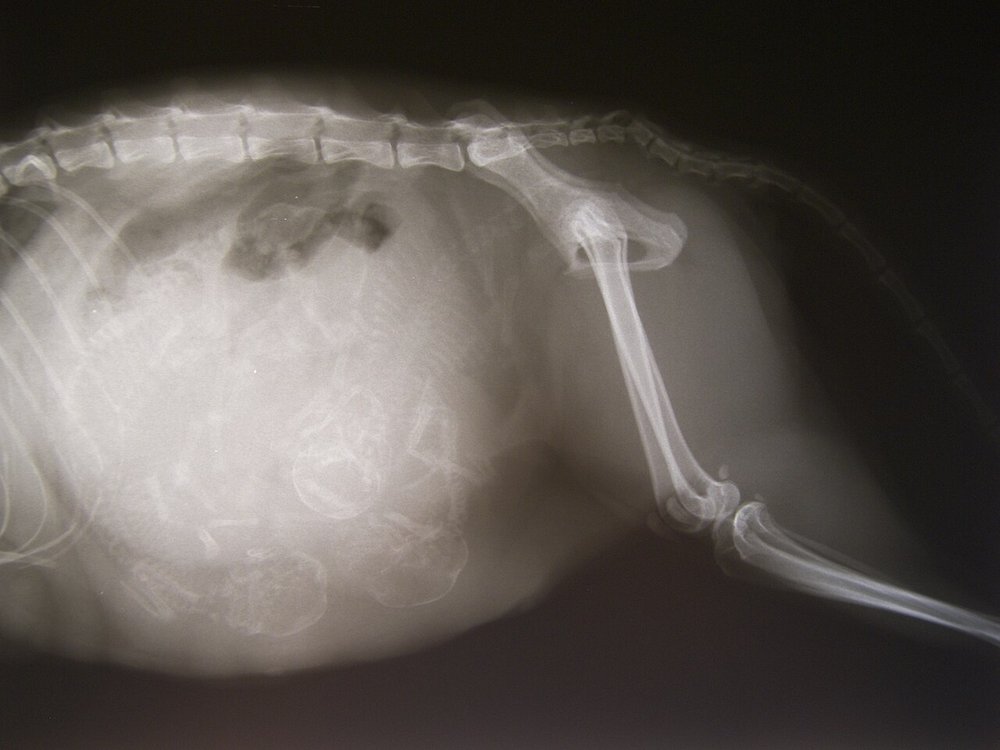
4-year-old bitch mated about 60 days ago. To plan the whelping, a lateral abdominal radiograph is taken:
 zoom_inEnlarge
Which statement about imaging diagnosis of pregnancy in the bitch is correct?
chevron_right Show answer and explanation
A. Ultrasound confirms pregnancy and viability from about 25 days; radiography is kept for late pregnancy, to count the fetuses
Correct. The fetal skeleton starts to mineralise around days 42–45 after ovulation, and in the last week skulls and spines can be counted reliably, as in this image. Ultrasound detects vesicles and heartbeats earlier but counts fetuses poorly in large litters.
B. By 30 days after mating the fetal skulls can already be counted on radiographs
At 30 days the skeleton is not yet mineralised: only an enlarged soft-tissue uterus would be seen, indistinguishable from pyometra.
C. A pregnant bitch should never be radiographed because of the risk of fetal malformations
By the time the skeleton mineralises, organogenesis is complete. A well-indicated radiograph in late pregnancy carries minimal risk to the fetuses.
D. Ultrasound in late pregnancy is the most accurate method for counting fetuses
In large litters ultrasound under- or overestimates the number, because not all fetuses are seen at once and some are counted twice or missed. Radiography counts them more accurately.
lightbulb Key takeaway
Practical plan: ultrasound at around 25–30 days to confirm pregnancy and viability, and a radiograph in the last week to count the fetuses and assess their size relative to the pelvic canal. Knowing how many fetuses there are tells you when whelping has finished.
Test yourself with 10 random questions
Diagnostic imaging · 200 questions, a different test every time
Related questions
Updated: October 31, 2026 · Educational content for veterinary professionals. It does not replace current clinical guidelines or the judgement of the attending veterinarian.