Chronic kidney disease in the cat: what ultrasound adds
14-year-old Birman cat with polyuria/polydipsia and weight loss; creatinine 3.4 mg/dL and urine specific gravity 1.016. Ultrasound of the left kidney with a linear probe:
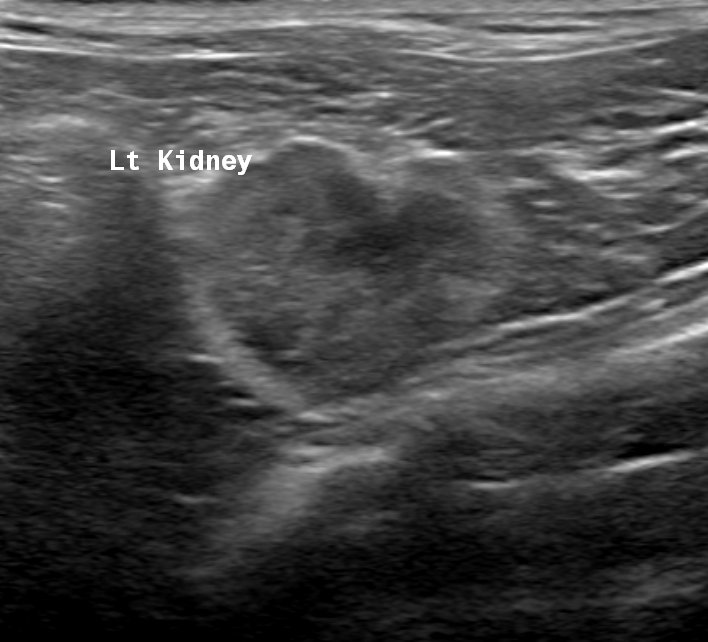 zoom_inEnlarge
Which statement about renal ultrasound in this cat is correct?
chevron_right Show answer and explanation
A. A kidney with a normal ultrasound appearance would have ruled out CKD
CKD can occur with normal-looking kidneys, especially in early stages. Ultrasound shows morphology, not function.
B. Cortical echogenicity allows the IRIS stage to be assigned
IRIS staging is based on creatinine and SDMA in a stable, hydrated patient, with substages by proteinuria and blood pressure. Imaging does not stage.
C. The changes are non-specific; its value lies in looking for treatable causes or complications
Correct. Small, irregular kidneys, a hyperechoic cortex and poorer corticomedullary distinction are common to many chronic nephropathies. Ultrasound is used to rule out ureteral obstruction, pyelonephritis, cysts, lymphoma or uroliths, which change treatment.
D. A hyperechoic cortex in a cat is always an abnormal finding
In many healthy cats, especially overweight neutered males, the cortex is hyperechoic because of fat in the tubules. It must be interpreted alongside laboratory results.
lightbulb Key takeaway
In feline CKD, ultrasound neither diagnoses nor stages: creatinine, SDMA, urine specific gravity, proteinuria and blood pressure do. Use it to look for treatable problems (obstruction, infection, neoplasia) and as a morphological baseline for follow-up.
Test yourself with 10 random questions
Diagnostic imaging · 200 questions, a different test every time
Related questions
Updated: October 31, 2026 · Educational content for veterinary professionals. It does not replace current clinical guidelines or the judgement of the attending veterinarian.