Hypertrophic osteodystrophy and panosteitis in young dogs
4-month-old Weimaraner with fever, anorexia, reluctance to move, an arched back and warm, painful swelling of the distal radial and ulnar metaphyses of both forelimbs. Radiographs show an irregular radiolucent band in the metaphysis, parallel to the physis, with an adjacent band of sclerosis. The puppy at the consultation:
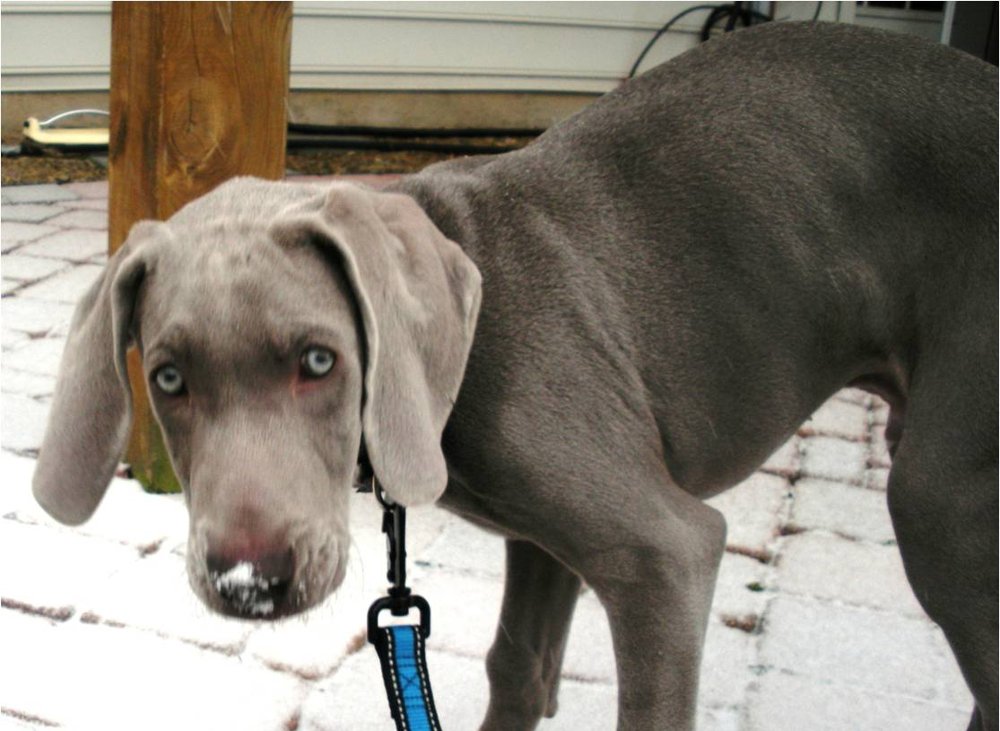 zoom_inEnlarge
What is the most likely diagnosis?
chevron_right Show answer and explanation
A. Panosteitis
Panosteitis increases medullary opacity in the diaphysis, especially near the nutrient foramen, and causes shifting lameness in dogs aged 5–18 months (typical in German Shepherds). It does not produce a metaphyseal line parallel to the physis.
B. Haematogenous bacterial osteomyelitis
It can affect the metaphyses of young animals, but bilateral, symmetrical involvement with a radiolucent band parallel to the physis is characteristic of another disease.
C. Retained cartilaginous core in the distal ulna
It appears as a radiolucent cone extending from the distal ulnar physis into the metaphysis, without fever or systemic signs. It is often an incidental finding or associated with growth disturbances.
D. Hypertrophic osteodystrophy
Correct. A metaphyseal radiolucent band parallel to the physis (‘double physis’) in a large-breed puppy with fever and painful metaphyses is typical. Later, a cuff of periosteal new bone forms around the metaphysis.
lightbulb Key takeaway
Tell them apart by location: metaphysis in hypertrophic osteodystrophy, diaphyseal medullary cavity in panosteitis. Both are self-limiting and treated with analgesia and support, although Weimaraners can have severe systemic forms. In panosteitis radiographic signs may lag behind the lameness: a normal radiograph early on does not rule it out.
Test yourself with 10 random questions
Diagnostic imaging · 200 questions, a different test every time
Related questions
Updated: October 31, 2026 · Educational content for veterinary professionals. It does not replace current clinical guidelines or the judgement of the attending veterinarian.