Adjusting gain, TGC, depth and focus on ultrasound
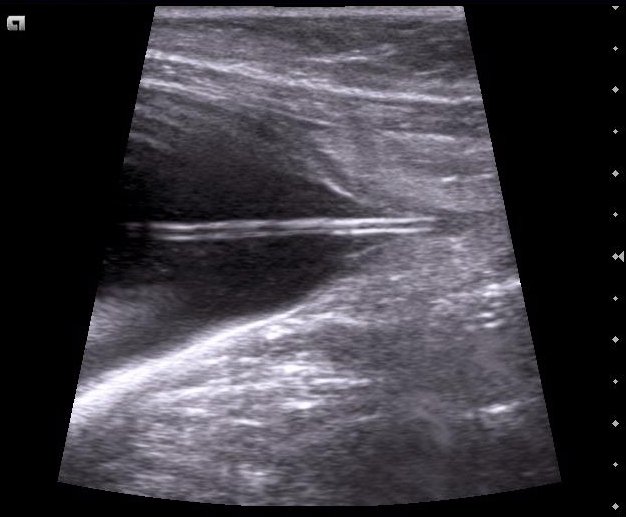
5-year-old male cat, catheterised after a urethral obstruction. At the start of the scan, with 10 cm depth, the bladder occupied a small area of the screen and appeared filled with fine diffuse echoes; the near field was very bright and the focus was at the most superficial level. After correcting the settings you obtain this image, with anechoic urine and the catheter clearly visible:
 zoom_inEnlarge
Which adjustment explains the improvement in the image?
chevron_right Show answer and explanation
A. Reduce depth so the organ fills most of the screen, place the focus at its level and adjust gain and TGC until urine is anechoic
Correct. A tailored depth improves resolution and frame rate; the focus increases lateral resolution at its level; and correct gain leaves fluid black. That 'sediment' may simply be excess gain.
B. Increase gain so as not to miss subtle echoes in the bladder
With gain already high, increasing it further fills urine with false echoes (pseudo-sediment) and reduces contrast in the parenchyma.
C. Increase depth to have a margin around the organ
More depth makes the organ even smaller on screen and lowers the frame rate. Depth should be limited to the structure of interest.
D. Leave the focus at the surface, because that is where resolution is always best
Lateral resolution is greatest in the focal zone; if it is at the surface, the organ being examined lies outside it. Place the focus at or just below the region of interest.
lightbulb Key takeaway
Adjustment routine: transducer and frequency → depth → focus → overall gain → TGC for even brightness from top to bottom. Use the bladder or gallbladder as a reference: fluid should look anechoic. Before reporting sediment, rule out excessive gain and side-lobe artefact.
Test yourself with 10 random questions
Diagnostic imaging · 200 questions, a different test every time
Related questions
Updated: October 31, 2026 · Educational content for veterinary professionals. It does not replace current clinical guidelines or the judgement of the attending veterinarian.