Calcinosis cutis on radiographs: other signs of Cushing's
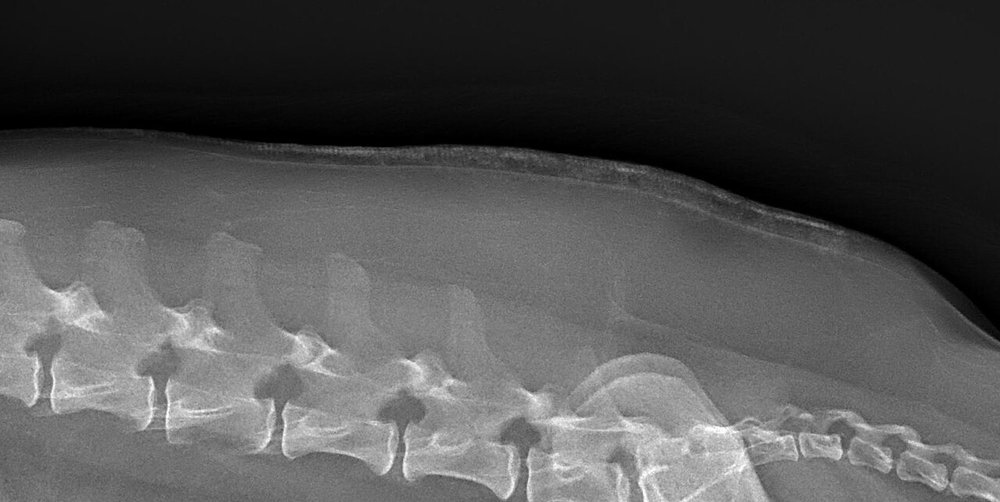
10-year-old crossbreed dog with polyuria, polydipsia, polyphagia and a pendulous abdomen. The radiograph shows linear mineralisation in the dorsal skin and subcutis. Lateral radiograph of the thoracolumbar region:
 zoom_inEnlarge
Which other radiographic findings would support hyperadrenocorticism?
chevron_right Show answer and explanation
A. Hepatomegaly and a distended bladder; if an adrenal gland is mineralised, suspect an adrenal tumour
Correct. Hypercortisolism causes hepatomegaly from vacuolar hepatopathy, a large bladder from polyuria and abdominal fat deposition that improves detail. Bronchial mineralisation and osteopenia are also possible. In dogs, a mineralised adrenal suggests neoplasia, although it does not distinguish adenoma from carcinoma.
B. Microhepatica and small kidneys, typical of cortisol excess
Microhepatica points to a portosystemic shunt or cirrhosis. In hyperadrenocorticism the liver is usually enlarged.
C. Splenomegaly with mineralised nodules, a pathognomonic sign of Cushing's
There is no pathognomonic radiographic sign of hyperadrenocorticism, and nodular splenomegaly is not part of the typical picture.
D. Vertebral lysis, because the skin mineralisation arises from a bone tumour
The calcinosis cutis of Cushing's is dystrophic: dermal collagen damaged by glucocorticoid excess mineralises with normal calcium and phosphate. It does not indicate a bone tumour.
lightbulb Key takeaway
Calcinosis cutis is highly suggestive of glucocorticoid excess, endogenous or iatrogenic. Radiography supports but does not diagnose: confirm hyperadrenocorticism with endocrine tests (ACTH stimulation or low-dose dexamethasone suppression) and differentiate pituitary from adrenal origin with ultrasound and other tests.
Test yourself with 10 random questions
Diagnostic imaging · 200 questions, a different test every time
Related questions
Updated: October 31, 2026 · Educational content for veterinary professionals. It does not replace current clinical guidelines or the judgement of the attending veterinarian.