Widened, irregular physis in a puppy with acute lameness
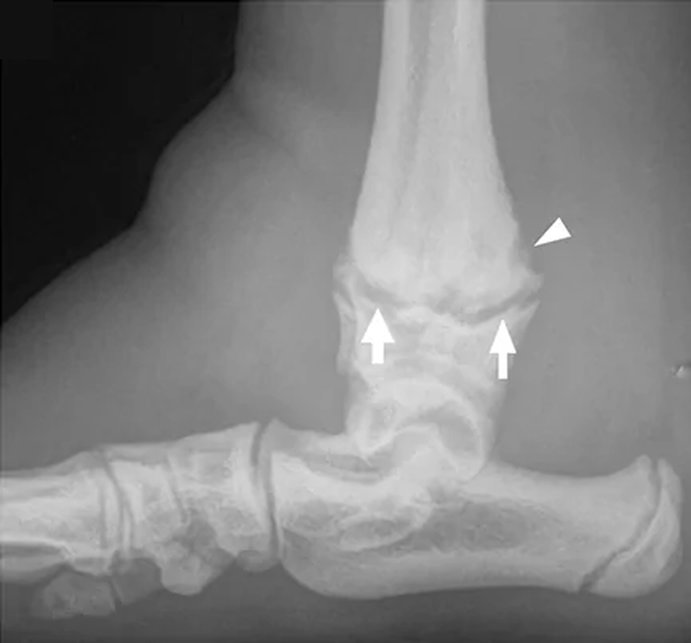
19-week-old Boxer with acute non-weight-bearing lameness of the left hind limb, fever, and hot, painful swelling of the distal crus and tarsus. The other limbs are normal and there is no history of trauma. Lateral radiograph of the left tarsus:
 zoom_inEnlarge
What is the most likely interpretation and the next step?
chevron_right Show answer and explanation
A. Hypertrophic osteodystrophy: NSAIDs and recheck in two weeks
Hypertrophic osteodystrophy is usually bilateral and symmetrical, in the distal radial and ulnar metaphyses, with a radiolucent band parallel to the physis. Here a single limb is affected and the lesion is centred on the physis itself.
B. Traumatic Salter-Harris type I fracture: reduction and fixation
There is no trauma and no epiphyseal displacement, and the periosteal reaction, heterogeneous bone and fever do not fit a recent fracture. Even so, an infected physis can fracture within hours.
C. Retained cartilage core: radiographic monitoring only
A retained cartilage core occurs almost always in the distal ulna, as a radiolucent cone in the metaphysis, without fever or swelling.
D. Septic physitis: cultures (aspirate, blood) and antibiotics
Correct. The distal tibial physis is widened and irregular, with heterogeneous surrounding bone, irregular periosteal reaction and marked soft tissue swelling in one limb of a febrile puppy: this suggests septic physitis/haematogenous osteomyelitis. Collect samples for culture before antibiotics and restrict movement.
lightbulb Key takeaway
In growing animals, haematogenous osteomyelitis mainly affects the metaphysis and physis. A widened, irregular physis with periosteal reaction in a single limb, with fever, should make you think of infection. The physis is weakened and can sustain a Salter-Harris fracture within a short time.
Test yourself with 10 random questions
Diagnostic imaging · 200 questions, a different test every time
Related questions
Updated: November 1, 2026 · Educational content for veterinary professionals. It does not replace current clinical guidelines or the judgement of the attending veterinarian.