Acute kidney injury in the dog: what ultrasound adds
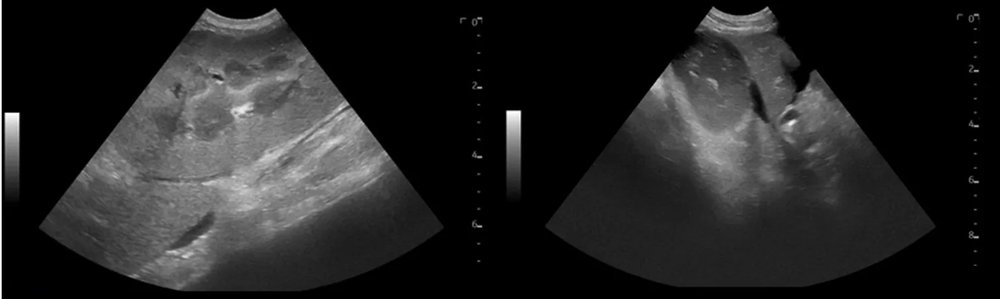
5-year-old crossbreed dog, not vaccinated against leptospirosis, walked daily in urban parks. It has had vomiting, anorexia and polyuria for 4 days, with creatinine above 10 mg/dL and preserved urine output. Radiographs show both kidneys enlarged. Ultrasound of the left kidney (left) and the perirenal space (right):
 zoom_inEnlarge
Which statement about these ultrasound findings is correct?
chevron_right Show answer and explanation
A. They indicate end-stage chronic kidney disease and rule out dialysis
Advanced chronic kidney disease usually gives small, irregular kidneys with poor corticomedullary distinction. Large, smooth kidneys with a history of days point to acute injury, in which dialysis may be indicated.
B. They are pathognomonic for leptospirosis and make PCR unnecessary
Renomegaly, hyperechoic cortex and perirenal fluid occur in leptospirosis, but also with ethylene glycol, grapes, other nephrotoxins or pyelonephritis. No ultrasound pattern is specific.
C. They fit acute kidney injury but are not specific to the cause
Correct. Diffusely hyperechoic cortex, enlarged kidneys and a small amount of perirenal fluid are common in acute kidney injury. In an unvaccinated, exposed dog, leptospirosis is the first suspicion: confirm it with blood and urine PCR and paired MAT serology, and start empirical treatment meanwhile.
D. The perirenal fluid indicates renal rupture and requires urgent surgery
A small amount of perirenal fluid is common in acute kidney injury owing to oedema and inflammation, without trauma or rupture. It is not a surgical indication.
lightbulb Key takeaway
Ultrasound helps distinguish acute kidney injury (normal or large, smooth kidneys, sometimes perirenal fluid) from chronic disease (small, irregular kidneys) and rules out obstruction, but it does not identify the cause. In an unvaccinated dog with acute kidney injury, treat for leptospirosis empirically and protect staff while awaiting PCR and serology.
Test yourself with 10 random questions
Diagnostic imaging · 200 questions, a different test every time
Related questions
Updated: November 1, 2026 · Educational content for veterinary professionals. It does not replace current clinical guidelines or the judgement of the attending veterinarian.