Vertebral heart score in cats: the normal reference value
6-year-old domestic shorthair cat having thoracic radiographs before an anaesthetic. The vertebral heart score (VHS) has been measured on the lateral view: long axis in red and short axis in green, transferred onto the spine from T4. The sum is 7.8 vertebrae:
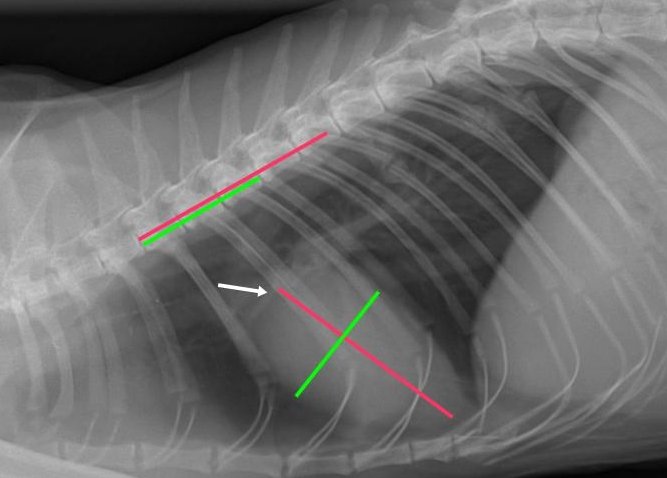 zoom_inEnlarge
How do you interpret this value?
chevron_right Show answer and explanation
A. Cardiomegaly: in cats the upper normal limit is 7 vertebrae
The feline reference value is 7.5 ± 0.3 vertebrae; 7 is within the normal range, not the upper limit.
B. It cannot be interpreted: the VHS is only validated in dogs
The VHS has also been standardised in cats (Litster and Buchanan, 2000), using the same technique as in dogs.
C. Normal: the feline reference is 7.5 ± 0.3 vertebrae and cardiomegaly is suspected above 8
Correct. In healthy cats the VHS is 7.5 ± 0.3 vertebrae on the lateral view, with an upper limit of about 8. A value of 7.8 is within the normal range.
D. Microcardia: it is well below the normal canine value of 9.7 vertebrae
Canine values do not apply to cats. Microcardia (hypovolaemia, hypoadrenocorticism) is judged against the species' own reference.
lightbulb Key takeaway
A normal VHS does not rule out hypertrophic cardiomyopathy: concentric hypertrophy may not enlarge the silhouette. With a murmur, gallop or arrhythmia in a cat, echocardiography is the test of choice; NT-proBNP is useful for screening.
Test yourself with 10 random questions
Diagnostic imaging · 200 questions, a different test every time
Related questions
Updated: October 31, 2026 · Educational content for veterinary professionals. It does not replace current clinical guidelines or the judgement of the attending veterinarian.