ACVIM stage after pulmonary oedema in MMVD: B2 or C?
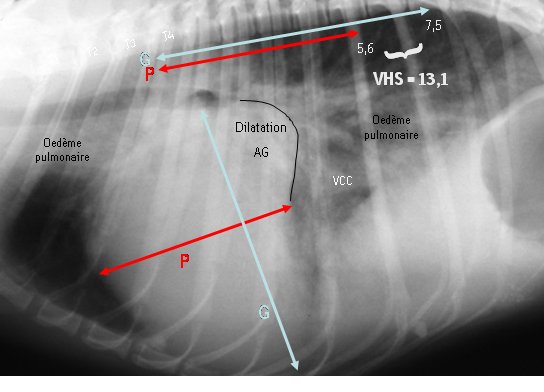
12-year-old dog with stage B2 myxomatous mitral valve disease, treated with pimobendan, now presenting with resting tachypnoea. Lateral radiograph with the radiologist's annotations (in French: “Oedème pulmonaire”, pulmonary oedema; “Dilatation AG”, left atrial dilation; VCC, caudal vena cava; VHS = 13.1):
 zoom_inEnlarge
With treatment, the oedema resolves and the dog becomes asymptomatic. In which ACVIM stage should it be classified?
chevron_right Show answer and explanation
A. Stage C, even though the oedema has resolved
Correct. Stage C includes dogs with current or past signs of congestive heart failure. After an episode of cardiogenic oedema the dog remains in stage C even when compensated, and needs chronic treatment (furosemide, pimobendan, spironolactone and, depending on the case, an ACE inhibitor).
B. It returns to stage B2 once clinical signs disappear
ACVIM stages do not go backwards: having had congestive heart failure permanently defines stage C.
C. Stage D, because the VHS exceeds 12 vertebrae
Stage D is defined by refractoriness to standard heart failure treatment, not by heart size.
D. Stage B1 if the VHS falls below 11.5 with treatment
Stage B1 is for dogs without remodelling and without previous failure; a fall in heart size with diuretics does not change the stage.
lightbulb Key takeaway
ACVIM stages only move forward: B1, B2, C and D. Stage C is defined by having had congestive heart failure, not by heart size; stage D by refractoriness. Teach the owner to count the resting respiratory rate to detect relapses.
Test yourself with 10 random questions
Diagnostic imaging · 200 questions, a different test every time
Related questions
Updated: October 31, 2026 · Educational content for veterinary professionals. It does not replace current clinical guidelines or the judgement of the attending veterinarian.